Cyprus vs Greece: Tax Comparison for Entrepreneurs
Greek entrepreneurs face 22% corporate tax plus 5% dividend tax and high social contributions. Cyprus Non-Dom achieves ~5% effective. Full 2026 comparison.
Last updated: 2026-04-27
Effective tax rate comparison
~30-40%
Greece
~5%
Cyprus Non-Dom
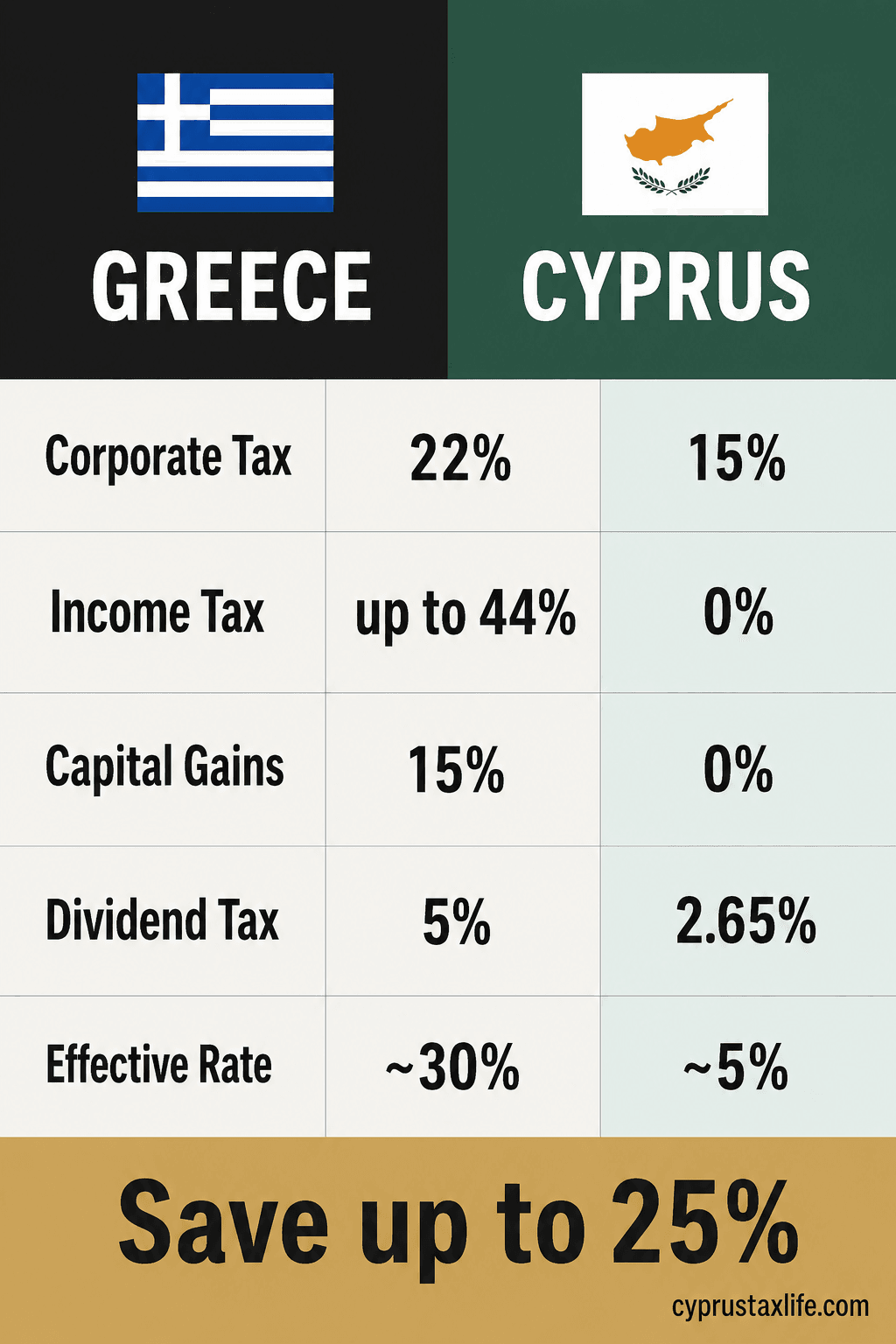
Tax Comparison: Greece vs Cyprus
| 🇬🇷 Greece | 🇨🇾 Cyprus (Non-Dom) | |
|---|---|---|
| Corporate tax | 22% | 15% |
| Income tax | Up to 44% | 0% (dividends) |
| Capital gains tax | 15% (on shares) | 0% (no Cyprus property) |
| Dividend tax | 5% | 0% income tax + 2.65% GHS |
| Wealth tax | None | None |
| Social contributions | ~14% employee + ~22% employer | ~4% on salary (capped) |
| Effective rate (entrepreneur) | ~30-40% | ~5% |
| VAT | 24% | 19% |
Tax Burden in Greece
Greece has significantly reformed its tax system in recent years, reducing the dividend tax to 5% (one of the lowest in the EU) and the corporate rate to 22%. However, the total burden for entrepreneurs remains high when considering all taxes.
Corporate tax (Forologos Eisodimatos Nomikon Prosopon) is 22% on business profits. Dividends are taxed at 5%, which is attractively low. However, the income tax scale for individuals reaches 44% (for income above EUR 40,000), and social contributions are substantial: employees pay approximately 14% and employers approximately 22%. For freelancers and self-employed, the EFKA contributions are very high and not always aligned with actual income.
The combined burden through a Greek IKE or EPE (equivalent of Ltd): 22% corporate tax on EUR 100,000 leaves EUR 78,000. Dividend tax of 5% on EUR 78,000 = EUR 3,900. Total: EUR 25,900, a 25.9% effective rate. However, this ignores the high social security contributions that entrepreneurs must pay as employees of their own company, which can add EUR 5,000-8,000+ annually and raise the total effective burden to 30-35%.
Greece also has a VAT rate of 24% (one of the highest in Europe) and a complex compliance environment with penalties for late filing. The "presumptive taxation" system (Tekmiria) can impute income based on lifestyle indicators (car value, home size, vacations), creating additional disputes.
Why Cyprus is Better for Entrepreneurs
For Greek entrepreneurs, Cyprus presents a uniquely accessible option. The proximity (1-1.5 hour flight), the Greek language (Greek is one of Cyprus's official languages), and the cultural similarity make the transition smoother than moving to any other low-tax country.
Despite Greece's recent improvements (especially the 5% dividend tax), Cyprus Non-Dom still achieves a lower effective rate (~5% vs 25-35%) because the corporate tax is also lower (15% vs 22%), and the GHS contribution (2.65%) is less than Greek social security requirements.
Beyond the numbers, Cyprus offers: freedom from Greece's complex tax compliance environment, the 60-day rule for flexible residency, no presumptive taxation system, no VAT at 24% (Cyprus: 19%), and EU-standard banking with fewer restrictions.
Greek entrepreneurs in the IT, consulting, and digital services sectors have been relocating to Cyprus in significant numbers since 2020. Limassol in particular has a large Greek-speaking business community, Greek schools, and Greek supermarkets.
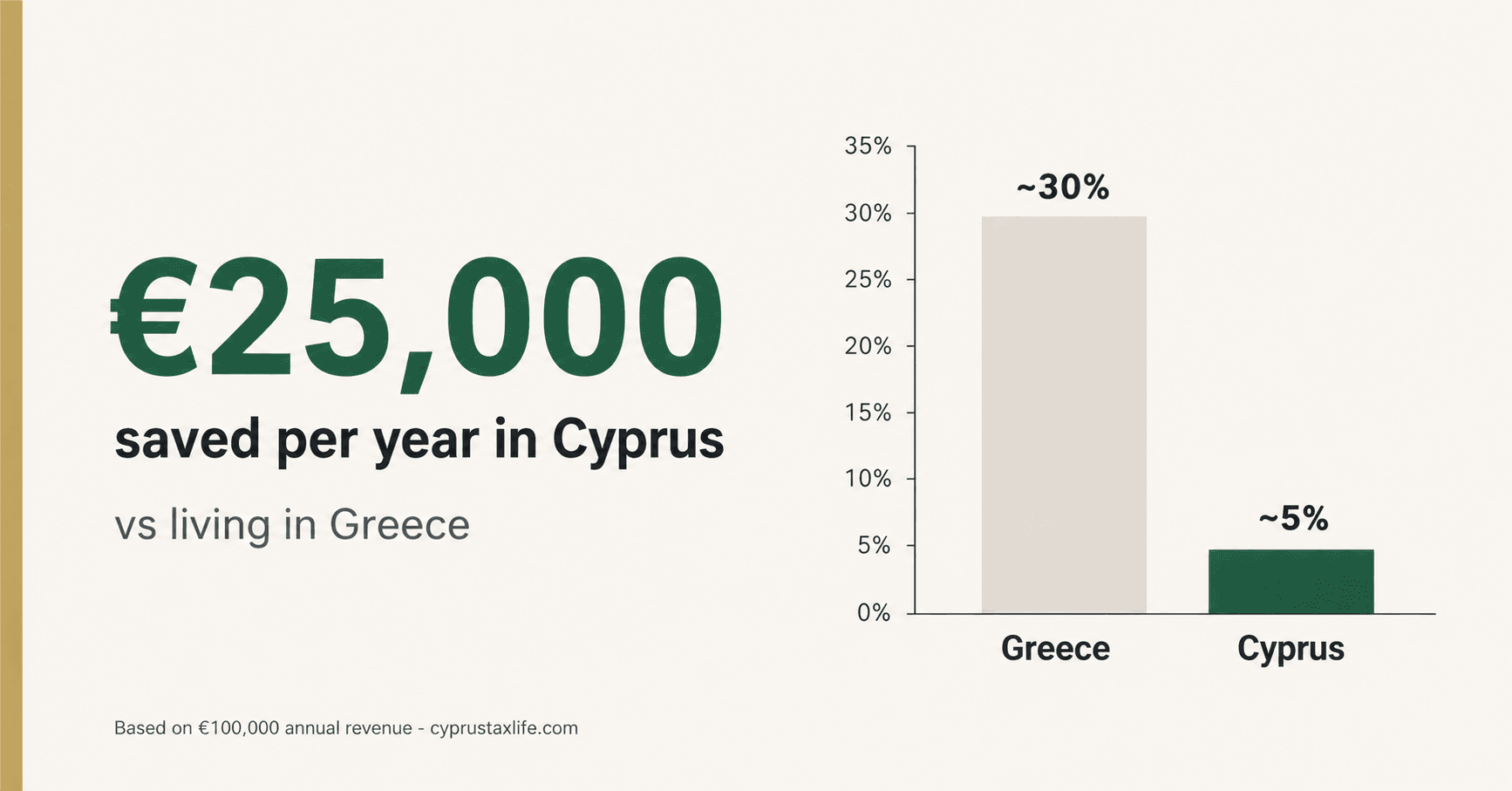
Tax Calculation: EUR 100,000
🇬🇷 Greece
🇨🇾 Cyprus (Non-Dom)
Annual savings moving to Cyprus
EUR 25,000
EUR 125,000 over 5 years
Double Tax Treaty: Greece - Cyprus
Greece and Cyprus have a double tax treaty in force. Key withholding rates: dividends 10-25% (reduced under EU parent-subsidiary directive to 0% for qualifying EU holdings), interest 10%, royalties 5%. The treaty follows OECD model principles. Greek entrepreneurs should be aware that Greece has anti-avoidance rules targeting moves to low-tax jurisdictions and requires genuine relocation (not just mailbox residency) to avoid Greek tax authority challenges.
Exit Tax and Emigration from Greece
Greece does not have a formal exit tax for individual taxpayers emigrating. Capital gains on Greek company shares are taxable in Greece at 15% if realized while a Greek tax resident. Once you become a Cyprus tax resident, gains on non-Greek assets are not taxable in Greece. Greek real estate remains subject to Greek taxes regardless of residency. The main practical challenge is deregistering from EFKA (social security) and AADE (tax authority) and ensuring the transition year is handled correctly.
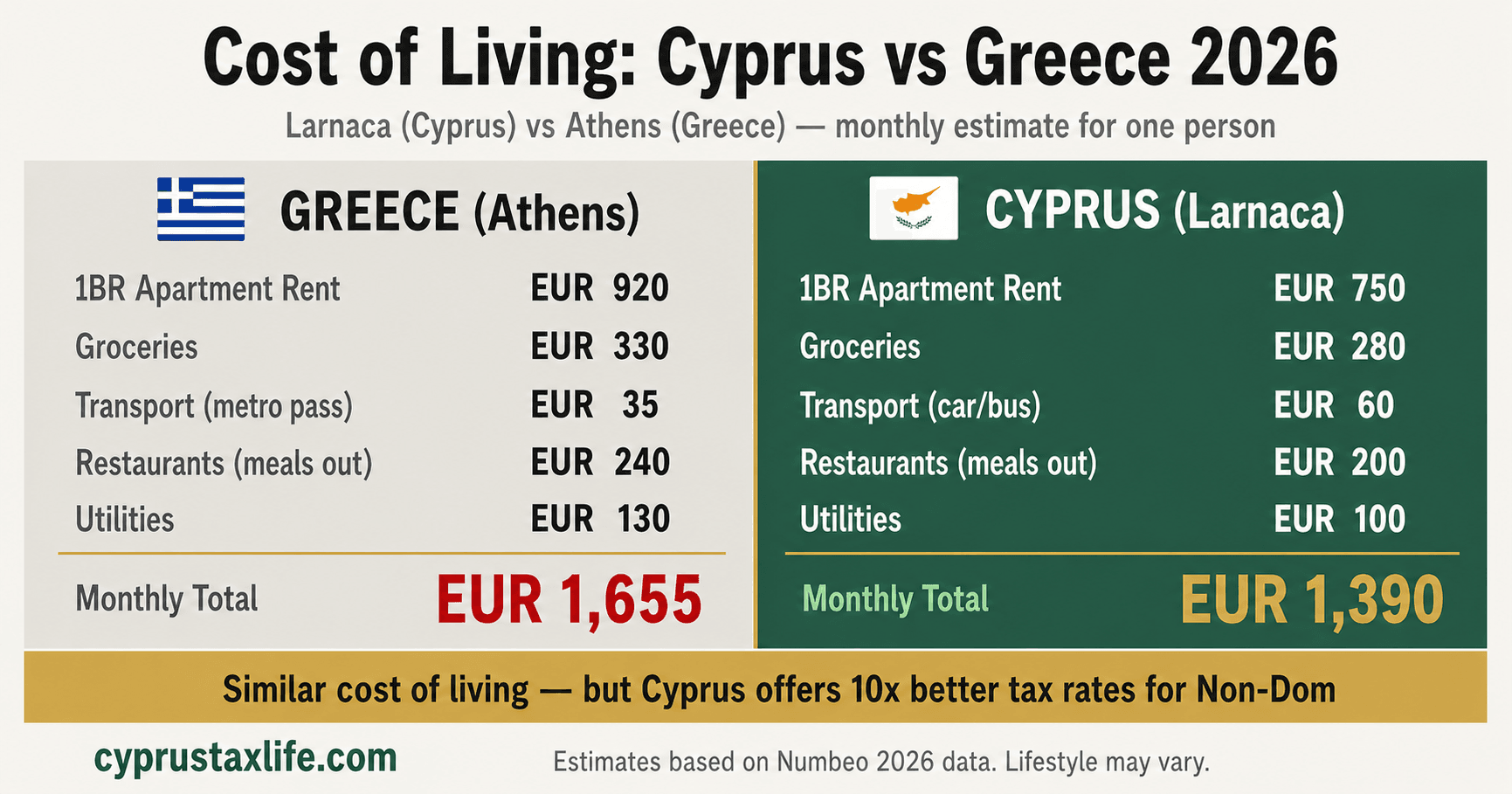
Cost of Living: Greece vs Cyprus
Both Greece and Cyprus offer Mediterranean lifestyle at comparable costs. Athens is similar to Limassol in housing costs (EUR 700-1,100 for 2-bedroom). Thessaloniki and smaller Greek cities are cheaper (EUR 450-700). The Greek islands are expensive in tourist areas. Dining out is slightly cheaper in Greece on average. Groceries are comparable. The main difference is the tax burden: EUR 25,000+ annual savings on EUR 100,000 revenue more than compensates for any cost-of-living differences. Cyprus has slightly better weather year-round and cleaner, less crowded beaches.
Practical Steps to Relocate
Establish a Cyprus Ltd company (5-7 working days, approximately EUR 2,100)
Ensure you have a genuine place of residence in Cyprus (rental agreement)
Deregister from AADE (Greek tax authority) - submit change of tax address
Deregister from EFKA (social security) if self-employed or as employee of your Greek company
File your final Greek tax return (E1 form)
Apply for Cyprus tax residency
Register as Non-Dom at Cyprus Tax Department
Obtain your Yellow Slip (EU citizen registration)
Open a Cyprus bank account
Set up the Cyprus payroll structure
Register for GHS healthcare contributions
Frequently Asked Questions
Do I need to speak Greek to live in Cyprus?+
Is Greece's 5% dividend tax better than Cyprus?+
Will the Greek tax authority challenge my move?+
Can I maintain my Greek company while living in Cyprus?+
What about Greek presumptive taxation (tekmiria)?+
How long does it take to set up everything in Cyprus?+
Sources and References
Tax data: PwC Worldwide Tax Summaries, KPMG Tax Guides (2025/2026), Big Four country guides, government tax authority publications. Effective rates are approximations for entrepreneur structures (company + low salary + dividends). Consult a qualified tax advisor before making decisions.
Free, no commitment
Does this apply to your situation?
Tell us your situation and we'll connect you with our specialist expat advisory firm in Cyprus. They have years of experience managing relocations like yours.
Related Articles
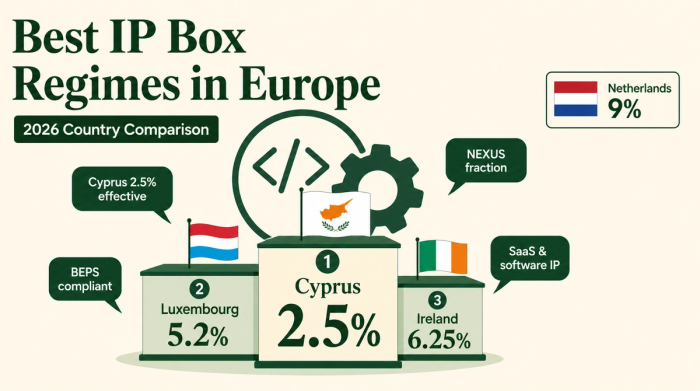
Compare the best IP box regimes in Europe: Cyprus 2.5%, Luxembourg 5.2%, Ireland 6.25%, Netherlands 9%. NEXUS rules, qualifying IP, and which regime suits SaaS and software companies.
 Miriam Alonso
- Tax Planning
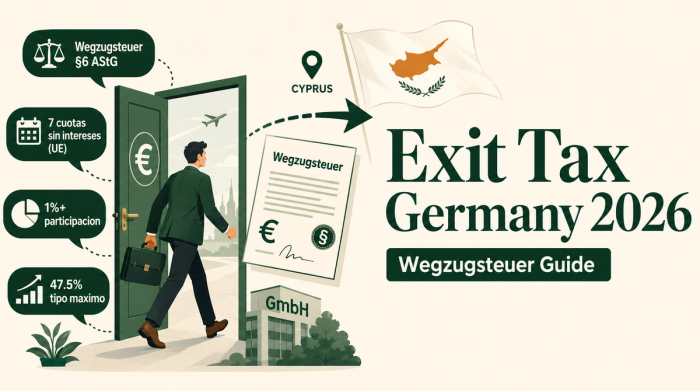
Germany's Wegzugsteuer applies to GmbH shareholders with 1%+ stake who have been resident for 10+ years. Learn the rates, the 7-instalment EU option, and how Cyprus interacts with it.
Miriam Alonso- Tax Planning

The Dutch exit tax (conserverende aanslag) applies to substantial shareholdings and pension rights when you leave. Learn rates, EU deferral rules, and how Cyprus interacts with it.
Miriam Alonso- Tax Planning